June 7, 2010

Caladium Watch


Every spring, when the chance of frost is over, I plant caladium corms in the shade garden to the west of our house. Then I begin a daily watch for the first sign of a plant poking its way out of the soil. It takes a long time for that first tightly-curled leaf to appear and until it does, I'm riddled with uncertainly. Did I plant it too deep? Was the corm healthy and alive? Am I watering it too much? Too little? Does it need more sun or more shade? Just when I'm sure that a squirrel or other hungry critter must have burrowed into the earth and devoured every nascent plant, I spy a touch of color spiraling up from the dark ground.

A caladium corm is not a pretty sight. It looks like a clump of dirt:
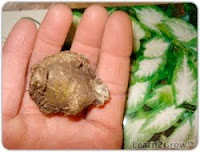


It's hard to tell whether it's up or down or sideways, but the plants one little corm produces are spectacular:

Waiting for the caladium to appear is somewhat like waiting to hear from editors or agents. I send out queries and manuscripts that are, I know, more attractive than the dirt-colored corm. I have similar questions. Was my query lackluster? Too aggressive? Did I revise until I was sending my best work? Did I study the market enough to be sure I was sending my work to the best editor/agent/publisher? I wait and watch the mailbox and my inbox for replies that will produce attractive results...a magazine editor accepting an article or story...an agent agreeing to represent me and my work. Lately I've had good luck in the magazine world, but I keep hoping that one book-length manuscript will take root with an agent or publisher and produce spectacular results.


May 23, 2010

It's been three weeks since I posted, but I have several good excuses (good at least in my mind). My last post was about baby cardinals and trying to write a picture book a day. And did I mention that we were in the midst of a painting project?

The cardinals have fledged. I managed to write a rough draft of seven picture books, but the painting goes on. Home improvement projects seem to become more complicated as they progress. We started with walls that needed a new coat of paint, which led to touching up the baseboards and woodwork, which led to new switch plates and heating vent covers. Then the scratches and stubborn drawers on the old dresser glared out at us from the lovely new walls and a new project has begun. We're almost at the finish line, when we'll put everything back together, retrieve clothes and shoes from the living room, hang new pictures, and clean out all the unnecessary "stuff" we've discovered lurking in the dark corners of the closet.

Redecorating is much like manuscript revision. I finish the fourth or fifth draft and realize that my new ending doesn't make sense unless I go back to insert passages and characters, and as I make the necessary "fixes," I realize that other aspects of the story have gone wrong. Somewhere along the line I've changed a character's name or changed the sequence of events so that it no longer makes sense. Each time I read through I find something else that needs sprucing up or a fresh coat of words or action that needs some scratches removed. And, finally, I clean out all the unneeded "stuff" that clutters up the story.

I've just finished "redecorating" HANNAH'S LEAP and have sent off queries to a group of agents who seem interested in middle grade historical fiction. I believe the new HANNAH'S LEAP is the new improved version. I hope an agent agrees to give it a try!


May 2, 2010

Baby Birds and Picture Books

Yesterday we discovered three baby cardinals in the nest outside our kitchen window. Their parents are busy filling those hungry mouths with mushy morsels of worms and other delicacies.


On the same day I began participating in National Picture Book Writing Week (NaPiBoWriWee), an undertaking for nutty children's writers. The challenge is to write a picture book a day for one week, beginning May 1. So far, I'm on schedule.

Apparently, so are the cardinal babies.

April 28, 2010

My apologies to the cardinal family

This morning the male cardinal was in plain view and probably has been around all the time his mate has been on their nest. So, I take back my suspicions that he was a deadbeat or unfaithful or --worst of all--dead at the claws of Whiz the cat.

The prospective father's job, I've learned, is to guard the territory and bring an occasional treat to his mate. He does this stealthily because today is the first time we've seen him.

Now--to wait for the eggs to hatch and watch the next goings-on outside the kitchen window!

April 27, 2010

Cardinal Mother


A female cardinal has built a nest in the holly tree outside our kitchen window. She rarely leaves her post and then only briefly to fetch a seed or two from one of our feeders. When the weather turned cold again, she snuggled in to protect her eggs.

photo by Peter Doyle

We wonder where the male is. Did the female choose a deadbeat spouse that can't be bothered sharing the parental role? Or did her mate take off with a younger redhead? There's a strong possibility that he met with the backyard equivalent of drive-by violence. A neighborhood cat named Whiz seems especially fond of stalking the feeders hoping for a bite of bird. We've found more than one dead cardinal or robin in the yard.

Whatever the reason for her mate's absence, the prospective mother keeps her eggs warm and struggles to maintain her energy with sunflower seeds and suet. She'll need all the energy she can muster once those chicks hatch and start clamoring for food, food, glorious food.

I check on her every morning and throughout the day and whisper encouragement through the closed window.